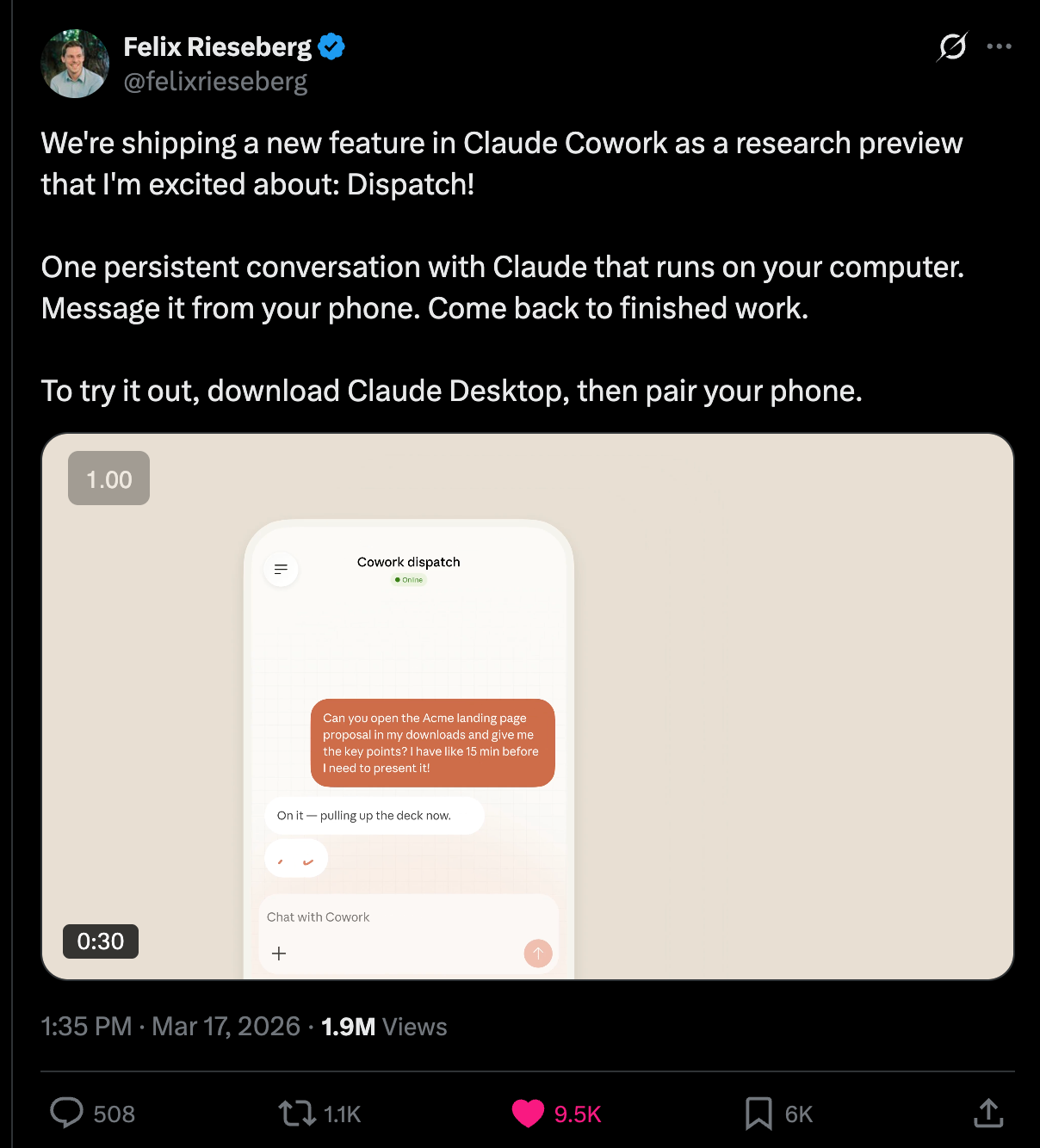
The AI Feature Wars Heat Up
The pace of competitive AI development has reached a new intensity. Anthropic launched Claude Cowork this week, positioning it as their direct answer to OpenAI's OpenClaw collaboration tool, according to Latent Space. Industry experts like Simon Willison and Ethan Mollick have already drawn favorable comparisons between the two platforms.
This rapid competitive response represents a shift from the research-driven breakthroughs we covered earlier this week to an all-out feature war between AI companies. The speed at which Anthropic countered OpenAI's move suggests these companies are now watching each other's product launches in real-time and responding within days rather than months.
Beyond Chat: Claude's Workflow Revolution
While the Cowork announcement grabbed headlines, a deeper transformation is underway. Towards AI reports that Claude's plugin ecosystem has evolved to the point where users can "transform Claude from a chatbot into an AI that can code, browse, access your data, and automate your entire workflow."
This positions Claude not just as a conversational AI but as a comprehensive workflow automation platform—a significant strategic expansion that goes beyond simply matching OpenAI feature-for-feature. The plugin architecture represents a fundamentally different approach to AI extensibility, allowing third-party developers to expand Claude's capabilities rather than waiting for Anthropic to build everything internally.
The Ecosystem Matures Around Execution
The broader context, as reported by Latent Space, shows an entire ecosystem maturing around these capabilities:
- LangChain introduced LangSmith Sandboxes for secure code execution
- Unsloth Studio launched as an open-source web UI for training and running 500+ models locally
- Companies like Stripe and Coinbase are already using background coding agents in production
"The overall trend shows the ecosystem maturing around secure execution environments, composable agent skills, and workflow-native surfaces rather than just raw model improvements," notes Latent Space.
Usage Concerns Amid Expansion
While these capabilities expand, users on r/ClaudeAI have raised concerns about potential changes to Claude's usage structure. One user questioned whether weekly usage limits had been removed, suggesting uncertainty about how these new features might affect accessibility and pricing.
This tension between expanding capabilities and potential usage restrictions echoes the broader challenge facing AI companies: how to monetize increasingly powerful tools while maintaining the accessibility that drove initial adoption.
What This Means
The rapid-fire competitive responses between Anthropic and OpenAI signal a new phase in AI development. We've moved from the era of breakthrough model releases to an intense period of feature iteration and strategic positioning. The real innovation is happening at the application layer—plugins, collaboration tools, and workflow integration—rather than in the underlying models themselves.
For developers and enterprises, this creates both opportunities and challenges. The expanding capabilities mean AI can now handle more complex workflows, but the proliferation of competing platforms and rapidly changing feature sets makes long-term planning difficult. As we noted in our coverage of AI agent infrastructure earlier this week, the ecosystem is building foundational layers even as the surface-level features evolve at breakneck speed.
The question isn't whether AI will transform workflows—that's already happening. The question is which platform's vision of that transformation will win, and whether the current pace of competitive feature development is sustainable.