The Reality Check Arrives
After months of breathless AI adoption across every conceivable domain, the technical community is systematically mapping where large language models (LLMs) actually fail. Three separate evaluations this week—spanning finance, data processing, and pure logic—reveal fundamental limitations that are reshaping how engineers approach AI deployment.
The findings suggest we're entering a maturation phase where the question isn't whether LLMs can tackle a task, but whether they should.
Financial Analysis: A Bridge Too Far
When Harvard Business Review tasked competing LLMs with stock picking, the results exposed critical weaknesses in financial decision-making capabilities. The experiment revealed that while LLMs can process financial narratives and market sentiment, they struggle with the complex reasoning required for investment decisions.
This matters because financial institutions have been racing to deploy AI for trading and analysis. The findings suggest that high-stakes financial decisions remain beyond current LLM capabilities—a sobering reality check for an industry betting billions on AI transformation.
When Traditional Methods Win
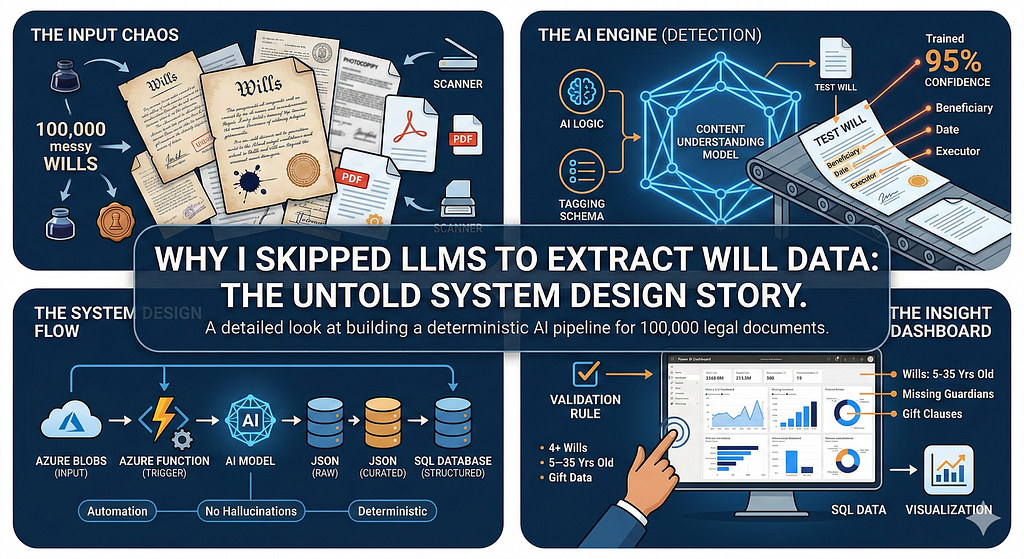
Perhaps more telling is the case of an engineer who needed to extract data from 100,000 wills. Despite the hype around LLMs for document processing, they chose traditional methods instead. According to Towards AI, the decision came down to reliability and scale: "Why I Skipped LLMs to Extract Data From 100,000 Wills" details how conventional approaches proved more suitable for large-scale, structured data extraction.
This real-world engineering decision highlights an emerging pattern: LLMs excel at unstructured tasks but often lose to traditional methods when dealing with structured data at scale. It's a crucial distinction that's often lost in the AI enthusiasm.
The Sudoku Test: Pure Logic Exposed
The most damning evidence comes from Pathway's "Sudoku Extreme" benchmark, which strips away linguistic elements to test pure reasoning. The results are stark: leading models including O3-mini, DeepSeek R1, and Claude 3.7 achieved 0% accuracy on very hard Sudoku puzzles, while Pathway's specialized architecture reached 97.4%.
The benchmark reveals a fundamental architectural limitation: transformers process information token-by-token with limited internal state, making them "poorly suited for search-heavy reasoning that requires maintaining multiple candidate solutions and revising assumptions under tight constraints."
The Trajectory: From Hype to Engineering
These findings represent a significant evolution from recent coverage of AI capabilities. While we've seen Claude deploying models to microcontrollers and individuals creating personalized cancer vaccines, we're now witnessing the community identify clear boundaries.
This isn't a step backward—it's engineering maturity. By understanding where LLMs fail, developers can make informed decisions about when to use AI versus traditional methods, potentially saving millions in misallocated resources.
The meta-story is clear: we're moving from asking "can LLMs do this?" to "when should we NOT use LLMs?"—a more nuanced approach that will ultimately lead to better systems. As the community builds missing infrastructure and grapples with reality distortion, these boundary-finding exercises provide essential guidance for practical deployment.
The future of AI isn't about universal application—it's about knowing when to use the right tool for the job.