The Promise vs. The Price Tag
The local AI movement is reaching an inflection point. As companies like LunarGate launch privacy-focused, EU-compliant self-hosting solutions and industry evangelists declare laptops are now "private AI powerhouses," a more pragmatic question is emerging from the developer community: does any of this actually pay for itself?
This tension crystallized in a recent r/LocalLLaMA discussion where a Colombian software developer, currently using Codex 5.3/5.4 for work, sought honest feedback about whether building a self-hosted AI coding setup would deliver "real productivity, or just an expensive hobby." The developer's specific concern about "significant hardware investment in their market" highlights a crucial blind spot in the local AI narrative—the economics don't scale equally across global markets.
Privacy Theater or Practical Tool?
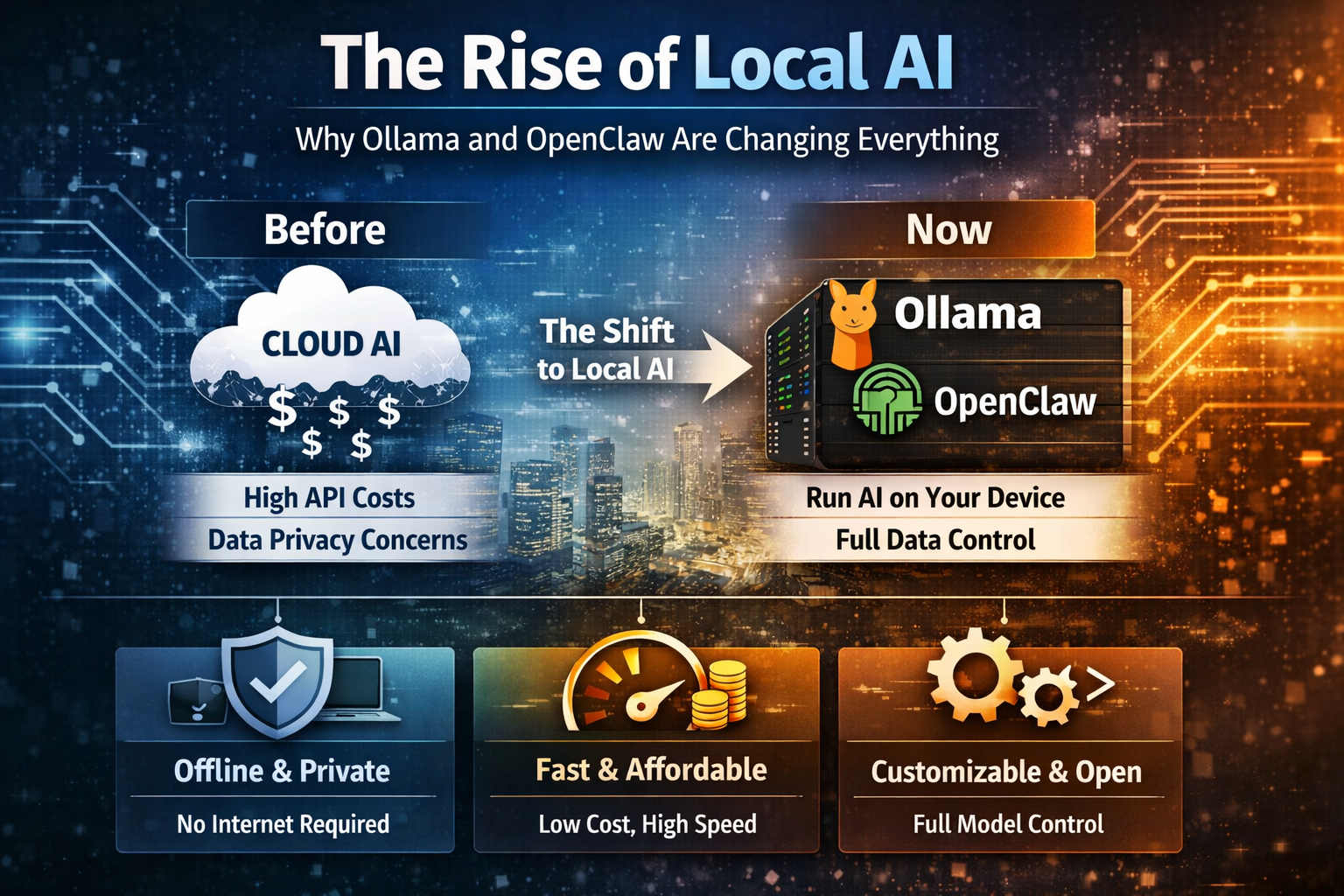
The evangelistic framing around local AI emphasizes empowerment and privacy. Towards AI published a piece positioning Ollama and OpenClaw as revolutionary tools that transform personal laptops into "private AI powerhouses," focusing heavily on the sovereignty and control aspects. Meanwhile, LunarGate is positioning itself squarely in the enterprise compliance space, promising "EU privacy and zero leakage" for organizations needing to meet regulatory requirements.
But the developer community's response reveals a different set of priorities. Rather than celebrating privacy features or local control, the r/LocalLLaMA discussion focused on practical concerns:
- Detailed setup requirements and actual budget breakdowns
- Which models deliver comparable performance to cloud solutions
- Whether early adopters have regrets about their investments
The Missing Middle
What's notably absent from both the promotional content and community discussions are hard benchmarks comparing self-hosted versus cloud AI performance. While LunarGate emphasizes compliance and the Towards AI piece celebrates empowerment, neither addresses the fundamental productivity equation that working developers care about.
This gap is particularly glaring given our recent coverage of AI agent infrastructure development, where the community has been rapidly building missing tools for memory, orchestration, and quality control. The local AI movement appears to be following a similar pattern—strong ideological positioning, but limited practical tooling for measuring actual value delivery.
Beyond the Binary
The emerging reality is that local AI adoption won't follow a simple cloud-versus-local binary. Instead, we're seeing segmentation based on specific use cases:
- Compliance-driven adoption: Organizations like those targeted by LunarGate who need local deployment for regulatory reasons
- Experimentation and learning: Developers using local models to understand AI capabilities without usage limits
- Specialized workflows: Scenarios where latency, offline access, or data sensitivity genuinely require local processing
The Colombian developer's question—asking for honest ROI assessment rather than ideological arguments—represents a maturing of the local AI conversation. As hardware costs remain substantial, especially in emerging markets, the industry needs to move beyond evangelism to provide clear frameworks for evaluating when local deployment makes economic sense.
Until vendors can demonstrate concrete productivity metrics that justify hardware investments, local AI risks remaining what the developer feared: an expensive hobby dressed up as a revolution.